Thursday, October 22, 2009


Something Worse--
As In Very, Very Good

Sarah Langan’s new novel, Audrey’s Door, begins today, October 22, one hundred and forty eight years ago. It’s the birth of New York City as more than a “way station between the wealthy South and Boston’s aristocracy.” In The New York Herald story that opens this novel, Langan aims for the heart of the American dream—something truly new world, something free of old hierarchies and feudalism—and she finds herself with that something worse than a lie that stands as our reality. The decadence that threatens to consume the protagonists of this novel, as it has consumed generation after generation of New York’s most privileged and those who suffer their wrath (and neglect), threatens the ability of everyone here to even dare to dream. On some level, I think that’s what this and every other ghost story is about—the foolish of hope, yes, but also its necessity.

Langan’s protagonist, Audrey Lucas, has almost no reason to believe she can persevere against the weight of time and history. Sure, she’s a brilliant architect, who recognizes the genius of the maddening apartment building she’s managed to rent for almost nothing. But she’s also obsessive compulsive, and she’s just broken up with a really decent guy, and her mother’s madness threatens to overtake her any hour of any given day. Though ghost stories are, in the end, all about such personal haunts, Langan has done a beautiful job delivering a great big, unique haunted house, a 110th street apartment building called the Breviary, that gives these ghosts room to ramble.

Many things make Langan distinct from any other writer in the horror genre (and I would argue in any genre). Though she writes the wildest kinds of surrealism--and her modernist leaps jump cliffs that would make Stephen King nervous--she earns it with a remarkable attention to the details of people's lives and exquisite, precise writing. Read the first page or two at the store for a sample of that. Even in the alternative voice of the Herald story, the aside regarding "one of Hearst's Negroes" who "took a bullet to the knee" says volumes about the blind prejudice and recklessness that mark this tainted ground.

But I personally love the little things that suggest Langan knows places too few of those writers touted on NPR and C-SPAN seem to know. When she brightens a mean childhood memory with the line, “On an empty stomach, Ball Park Cheese Dogs make the best meal in the world,” she says way more that ties me to this novel than I can adequately convey. In the same sense, in a particularly horrific revelation, she also finds what's funny about the blind impulses that drive the most malevolent of these characters forward: “In killing the superintendent, they’d murdered the only person willing to take out the trash.”

The opening of this book introduces us to that superintendent, a kind-hearted character named Edgardo who just can’t seem to catch a break in his halting conversation with his new prospective tenant. This is one of those beautifully wrought passages, where nothing should work, but it all does. Audrey Lucas is an almost unlikably round protagonist from the beginning—thinking him alternately clueless and lecherous and cruel, but finally realizing that he’s probably a decent guy. That last impulse is the closest to right, and she has a hard time finding it throughout the novel (as we all do in real life).

That’s what makes Sarah Langan so special. She know what a ghost story is about—isolation and promises doomed by the past—but she also knows what makes such stories haunt deep in the heart. For a ghost story to reach that place, it has to be unflinchingly true in terms of the lives we lead every day.

Langan creates real people who interact in real ways—and Audrey’s boyfriend Saraub; her miserable boss, Jill; and her sad neighbor, Jayne, all ring true. There’s plenty of horror here—both in the real tragedies of these peoples’ lives and in some of the things that happen to them. They certainly all have to face real horror by the time "Audrey’s door" begins to open.

But any writer can terrorize characters and readers on some level. I actually think cheap horror is about as easy a trick as cheap sentimentality. Want to make someone cry? Hurt a kitten. Want to revolt someone? Dwell on that pain. We see tons of that kind of sadism in our popular news media, let alone our horror stories.

But horror fiction has the potential to do something more—something King can do, as can Joe Hill, and as does Sarah Langan time and again. Horror fiction helps us face places extraordinarily uncomfortable to some part of the psyche somewhere beyond the fear of pain or death. Audrey’s Door asks us to contemplate the loss of all sense of order and justice and reason, and to compound that with the threat of the loss of individual integrity. What if the only things that gave life meaning became the most dangerous threat against that meaning? What if the things that make Audrey Lucas special enough to have a chance in this world are the very things that can bring her world to an end, along with the worlds of everyone she loves?

I can’t say much more without giving away a beautiful, rich and complex story. I will say the book's scary, in that shadows crawling way I most love. I also have to say that Sarah Langan has earned my trust. That’s why I’ll read everything she writes and no doubt blog about it. Like any good horror writer, she does terrible things in her writing, but she also makes sure it’s worthwhile. She cares about the people in her stories, and she cares about the reader. That compassion makes her more than a fine writer; it makes her important.


My previous Sarah Langan blogs--

Wednesday, January 23, 2008

A Keeper Indeed

She’s done it again. Sarah Langan's first novel, The Keeper, was more than a great horror debut--it set a bar that sorely seems to be missing in most contemporary fiction, much less horror fiction. Though he can't play a part in a movie without hamming it up, Stephen King's downright understated and realistic on the page. His strength as a writer stems largely from how well he seems to know people and the way his surrealism stays so firmly anchored in the world we know. Langan has this same pitch perfect ear, with a voice and vision comparable to King but distinctly valuable.

H.G. Well's famously said something like 9/10ths of fantastic writing must be rooted in a strict adherence to reality. I think that has more than a little to do with why the best horror writers manage to create realities that feel more genuine than most, ahem, respectable fiction. I know this teacher at the heart of the novel, a woman even her aesthetically disabled physician recognizes as beautiful but who only sees herself in terms of the gap between her teeth, her lisp, and her abandonment by the two most important men in her life.

And then there's the young Romeo and Juliet of the story, Maddie and Enrique. They are not romanticized as perfect kids, but they aren't ridiculed either. They are fumbling innocents from opposite sides of the tracks discovering sex one awkward step at a time. They are sweet, and they are selfish; they are real.That's what makes the horror of this story so shattering.

Figuratively and literally, Langan has mutated the monster that all but destroyed the working class town, Bedford, in her first novel and delivered it as a viral contagion on the more affluent neighboring community, Corpus Christi. And this second trip to the apocalypse is, if anything, a darker ride.For one thing, it's scarier. The Keeper holds a dear place in my heart for the beauty of its vision. But it was more of a ghost story, with that genre's tendency to find hope in a reckoning with the past.

The Missing doesn't offer hope, at least not an unqualified hope. The reader takes heart in the fact that people make it to the end of the book, and in the sometimes very small ways they hang onto their humanity against insurmountable odds. The beauty of this book lies in the quality of the fear. Time after time, sympathetic characters have to face down all but unimaginable horrors, dealing with the predators that have come under the control of this virus. They're as sick as those folks dying off in the first two hundred pages of The Stand, but they're also dangerous--they don't talk right, they don't walk right, they don't move right, and they somehow think as one and know their victim's darkest secrets and fears.

Most horror has a couple of good chills that stand out--Langan keeps them coming fast and furious without such moments losing their power.The scariest thing of all may be just how good she is.

My earlier review of The Keeper:http://takeemastheycome.blogspot.com/2006_10_15_archive.html

Tuesday, October 17, 2006

Where the River Runs Black

Happening upon Sarah Langan’s debut novel, The Keeper, at my corner grocery store has turned out to be a happy accident I can only compare to my “discovery” of Stephen King’s Salem’s Lot at a bus stop when I was 12 years old. And I feel doubly blessed right now to have read The Keeper on the heels of Bentley Little’s The Burning, two horror stories that also happen to be that most exquisite and rare find in the genre—distinctly American ghost stories.

Key to this is that this book begins with a quote from Bruce Springsteen’s “Independence Day” and manages to live up to that song’s haunted naturalism. The characters in this novel are real people living in the real America at the dawn of the 21st Century. Like so many Americans, these are characters who were born just a few decades ago into a society that promised, expected and planned for only the continued economic expansion that defined the American identity up to that point. And now those manufacturing jobs that served as the vehicle for that expansion have been automated away and become globally outsourced--leaving people who have given their lives to the company confused and betrayed and haunted by what never will be.

In this case, Langan focuses on the small town of Bedford, Maine, and a paper mill, but whether we’re from my ex-oil town in Oklahoma or Whirlpool’s lame duck home in Benton Harbor, Michigan, we know the scenario all too well, and that makes this setting universal.Even more important for satisfying fiction, particularly something as subjective as a ghost story, the focus on strong characters underscores the link between such political betrayals and our most personal secrets.

Rich, vivid characters abound in this novel—each with their own heroic qualities and each with dreadful failures that they can’t ever quite shake. All of them are haunted by the Marley family, particularly Susan Marley, a beautiful, preternaturally gifted girl who tries to save her family from itself but winds up all but destroying it and taking the town along for good measure.

Though Langan shows herself to be a writer with an unflinching ability to savage her characters and fling her readers right along with them into the abyss, she has the absolutely necessary counterweight that makes King and only a handful of other writers, never mind writers of horror, so special. She knows people, and she knows them too well to sell false hope or, an even easier trap in our age, to fall into an easy cynicism. Where this book ultimately goes, no reader is likely to expect, but it’s a conclusion that comes from a knowing vision and trust in the integrity of her characters.

Ultimately, what I think I like best about great horror stories and ghost stories in particular is the way they counter our daily inoculations against reflection. The best ghost stories are, almost without exception, rooted in a reflective quiet. That’s that psychic space necessary for those things that have their reasons for not staying buried to come out and play, and Langan delivers a sprawling universe of such spaces. Even during some of the most apocalyptic horrors that threaten to run the book right off the rails in its final third, the prose has a Bradbury-like whisper to it that serves to keep the reader close.

In another song from the same album as “Independence Day,” Springsteen asks, “Is a dream a lie if it don’t come true, or is it something worse?” The Keeper gives us a good look at the maw of that “something worse.” It has to. Some things will never rest until they are dealt with head on.Of course none of this would matter if Langan didn’t do it so well she’s only left me wanting more.Now if I could just get over the genius of such a title for a debut—not only accurately describing the book but the woman who wrote it.http://www.amazon.com/Keeper-Sarah-Langan/dp/006087290X/sr=1-1/qid=1161149105/ref=pd_bbs_1/102-3149483-3364948?ie=UTF8&s=books
Posted by Danny Alexander at 6:48 AM 0 comments

Wednesday, September 02, 2009


It’s Gonna Be Alright: The Joey Skidmore Show Comes To Town

I have many reasons to recommend Joey Skidmore’s set Saturday night (September 5th) at the Record Bar. But the one that stands out is the hardest to describe.

For almost two decades, I’ve been trying to figure out what happened that first time I saw Joey Skidmore at Kansas City’s cornerstone blues bar the Grand Emporium. If I saw him before that show (because I do feel I was familiar with him), nothing quite prepared me for that night.

Why? That’s the part I’m grasping for…. Crucial to it was his full on commitment to the stage. Skidmore tends to wear eye-liner with his shaggy dog haircut, and we were just barely into the nineties, so it feels like there might have been spandex involved. (At least back in the day, Skidmore could look like he shared a closet with Little Steven Van Zandt. He certainly embodies the garage commitment Little Steven has come to represent.)

But dress is only dress. What matters is how the performer fills the clothes. Joey Skidmore and his crack band, featuring the wonderful Mike Costelow on lead guitar, transported those paying attention—and it felt like the whole house was paying attention—to a sideshow world of possibility, something magical and mysterious in a way that would make sense to both Ray Bradbury and David Lynch. By the end of the show, the world felt upside down—all the melodrama of that hard-rocking gothic psychedelia became the only reality that mattered.

I don’t think I’ve ever written about Skidmore without citing the carnival. His new album shows his taste for the freak show has hardly abated over the years—whether it’s covering Captain Beefheart’s psycho swamp rocker, “Clear Spot,” or speculating about the bodies in the nightmare run of “the guy in the white jeep” or engaging in a Halloween-ready cover of Buck Naked and the Bare Bottom Boys’ “Teenage Pussy from Outer Space.”

The most disturbing Goth on the record, though, is the title cut, “Ventriloquist Doll.” It’s a lonely post break-up song about a guy, like Anthony Hopkins in Magic, who’s got more of a relationship with his puppet than anyone in the outside world. As if acknowledging the absurdity of the scenario, Skidmore winks by ending each refrain with “he’s only 24 inches tall.” Still, that takes none of the edge off the weirdness.

“Don’t open up the curtains/You’ll let the darkness out,” Skidmore cries against a backdrop of tremolo guitar supplied by the great Eric “Roscoe” Ambel and a ghost of soothing acoustic guitar from the late underground legend Nikki Sudden. In other words, the song is musically earnest as hell--despite the absurdity. And the more I hear it, I can’t help but think about the tension between the persona of Joey Skidmore the performer and the humanity of Joey Skidmore the artist, and the concept of being alone with his ventriloquist doll becomes frighteningly real. (Not just his—there’s no distancing yourself from that one—we all have a persona, and we all have a reality. From time to time, they tend to collide…or worse…intermingle in ways we don’t really want.)

Of course, Joey Skidmore’s fundamental talents lend him a persona somewhat beyond his control. His CD Baby site compares his music to the Stones for its stripped down funky quality, but more telling are the comparisons to Iggy Pop and the New York Dolls, and the “Mood” label for his music is “Weird.” What that means, really, is that he has a baritone that lends itself to camp in a manner embraced by Pop and Dolls lead singer Johansen, and Skidmore indulges that as well (obvious from the titles mentioned above).

But in a world of whiners and screamers and mumblers who are considered hip and cutting edge, it is worth noting that Skidmore actually has a beautiful voice. His bass baritone (somewhat deeper than Pop’s, maybe not Johansen) is as richly elegant as Ambel’s tremolo and Julia Thro’s shimmering lead on "Ventriloquist Doll." And he has a surprising range, which can reach a couple of octaves higher, on the next song “Crow Tree,” for the counterpoint to Morrells’ drummer Ron Gremp's tom tom-like drums and Mike Costelow’s prowling bass.

That song was produced by Sudden, so the basic track was finished before his death. But the next song, “It’s Gonna Be Alright,” written by Sudden, was recorded after his death. In just the way the song needs it to be, it’s exciting and affirming to hear Skidmore sing in his upper register in a way that calls to mind the Swell Maps/Jacobites singer. It’s a fun, rollicking song, with wonderful Hammond B3 organ supplied by Morrells’/Skeletons’ keyboardist Joe Terry.

Despite the death that haunts this record (Sudden died while it was being recorded and Skidmore dedicates it to 7 friends he lost in the two years before it was recorded, including KC’s Ron Rooks and Springfield’s Bill Brown), this song looks the darkness dead in the eye and finds a way to smile. The refrain, “it’s gonna be alright/each and every night” insists on its truth. It works in part because it's by Sudden, who inexplicably lost his own brother years before. And it works because Skidmore sings it having lost his collaborator. It works by recognizing it’s not going to be near right for those of us left behind ever again. Somehow, that contradiction stands and finds its own joy. That strikes me as a Nikki Sudden thing, but no doubt it's a place where Sudden and Skidmore meet.

Sudden’s spirit certainly runs throughout this record. The opening cut, “Pistol in My Pocket,” was co-written by Skidmore and Sudden in Berlin, and they recorded it and the title track outside of London in 2003. With lines like “lost all my money, but at least I spent your advance,” “Pistol” is mythic fun from beginning to end—taken over the top by a final guitar battle between Costelow and Ambel, Terry banging away on the piano in the background. It’s the kind of explosive fun that might close a lesser album, but it sets the mark high for what comes after—and the record, generally produced by the one and only Lou Whitney (Morrells/Skeletons), refuses to disappoint.

In fact, one of my favorite songs is the penultimate, “Wicked Witch,” a sassy celebration of Condoleezza Rice (the record came out in early 2008). Sudden also planned to contribute to the writing of this one. Skidmore e-mailed him the chorus a couple of weeks before Sudden died. The song certainly suggests Sudden’s influence. And its power doesn’t depend on the Bush administration either—the chorus “wicked, wicked, wicked witch of the West” puts the emphasis on the West over and above the witch. The exuberant interplay between guitar and piano at the end of this record brings everything home even before what feels to me like the encore, a high energy live cover of the Who’s “The Good’s Gone.”

That live tease is another reason to go see Saturday’s show, but more fundamental is the chance to hear all of these songs live. Mike Costelow is off on the road with the Jon Joiner Band, but one of Kansas City’s best lead guitarists, Gary Paredes (of the Titanics), has taken his place. Longtime Skidmore bass player Cory Corbino will shore up the rhythm section with the band’s new drummer Don Cleveland.

In today’s fragmented musical universe, Skidmore’s steadfast commitment to his ethos seems all the more remarkable. The promise is there in “Crow Tree,” the psychedelic slow burn he co-produced with Nikki Sudden and Lou Whitney. Part of the Joey Skidmore Band lore is that a murder of crows filled a tree outside their first jam session; I’d like to think that’s what the song’s about on some level. With that in mind, the song promises, “just past the crow tree….you’ll get a surprise.” Joey Skidmore's record suggests that's an understatement.


Tuesday, August 04, 2009


Learning How to Love

My great Oklahoma State friend Aileen Murphy has Nikki Giovanni singing her praises on the jacket copy for There Will Be Cats, so Aileen doesn't need me to pretend objectivity about this work. Still, our relationship has only a little to do with why I'm moved to write this blog.

My complex reactions to this book come from many directions. As I read and reread it, I find myself thinking of the many great people I've met this past year after getting involved in our school's first autism conference--ranging from parents struggling to understand their children and raise awareness about their children's needs to teachers and students on the autism spectrum, fighting to be understood and respected.

After all, to respect is to take another look, to take as many looks as are needed to begin to appreciate someone else's window on the world. With autism, this respect is particularly crucial because the objective reality is the same, but our place on the autistic spectrum (and I'm inclined to suspect we all have such a place) highlights a different aspect of that reality. A man I work with says that his son calls himself an "autist," suggesting the link between artistic perception and an autistic vision. Another friend's son loves David Byrne, and he seems to acknowledge that connection in the nature of the art.

I first heard the term Asperger's Syndrome a little over a decade ago when Aileen's son was diagnosed. I, along with most of the world, knew little about Asperger's or autism itself. We still don't know much. But everyone I've met with Asperger's has a unique passion for some aspect of the world most of us don't see, or see so clearly.

That's one reason this 14 poem collection is so important. It strives to see the world Aileen's son has seen as he has grown and learned--from simple childhood hostilities to an ambivalent relationship with his own reflection to a whole series of social rules that make no logical sense to school lessons that have no application to his real life. Sure, it teaches us a thing or two about autism, but it also brings forth echoes of all of our childhoods.

The flip side of which points up what I find most moving about this unique collection of poems--the way it distinctly captures the universal complexities of being a parent. Though many of these poems are from the son's point of view (which takes an act of willed perception crucial to parenting), three from the parent's perspective ("Armor," "Animal Heart," and "There Will Be Cats") resonate with me for all the ways they force me to confront my own parenting--the ways it hurts to perceive your child's defenses, the way such big love can turn "sticky" and "grasping," and the terrible way "the true future is unknown."

As these examples suggest, beyond parenting, There Will Be Cats navigates the many hard lines we all walk to love one another. More important, it captures the many reasons we need that struggle. Learning how to love teaches us to see the world all over again, every day, every time we listen a little harder, watch a little closer and strive for the give and take that is respect.

There Will Be Cats is available at Amazon and at http://www.fishinglinepress.com/

Friday, May 15, 2009

The Balance of Our Lives

For almost a month to the day, I’ve carried around a piece of paper with four names on it—Cheri Woods, Amy Farrand, Abby Henderson and Kasey Rausch, four musicians, playing April 13th, pretty much in the order they played….

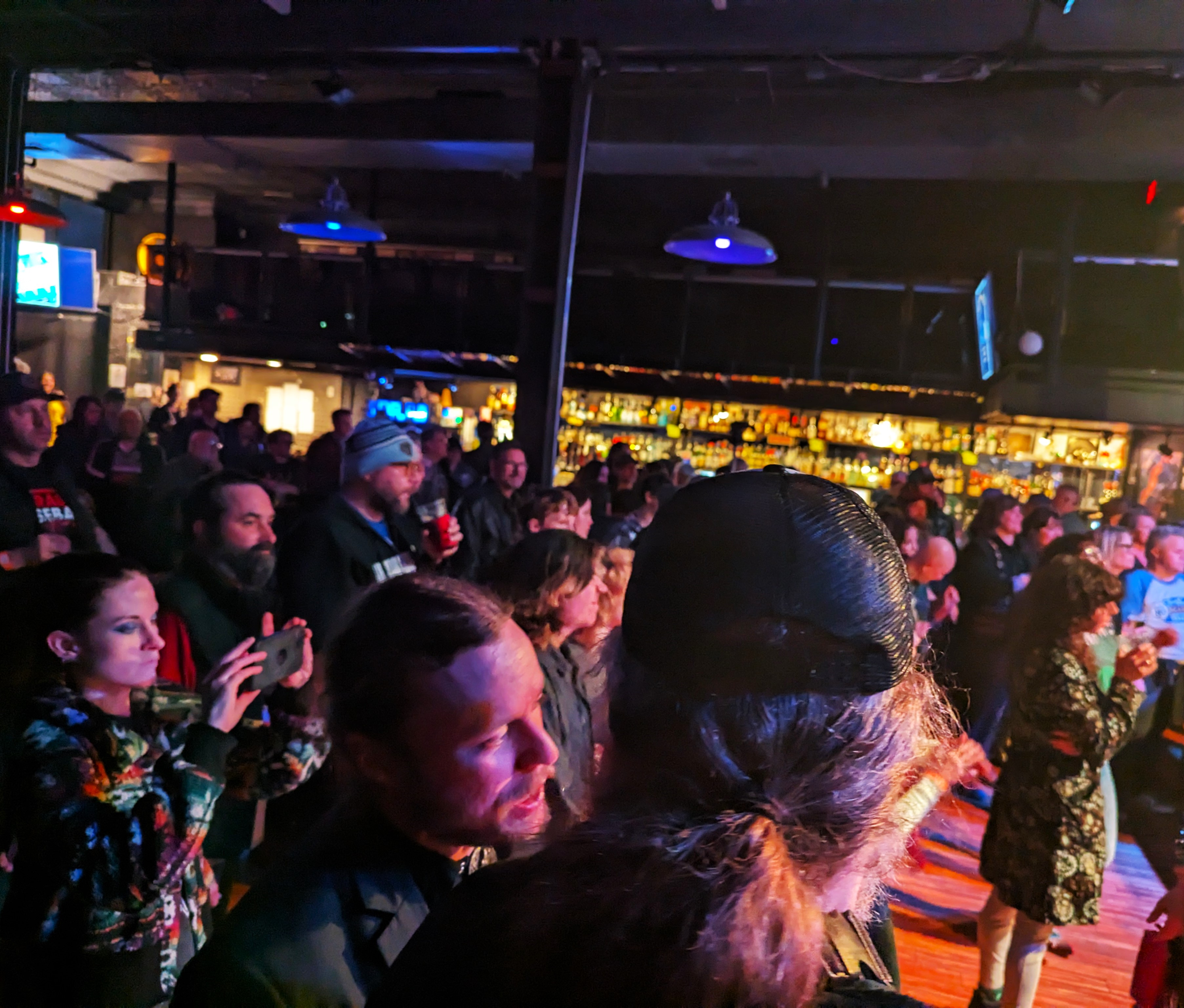
They were playing a Monday night show called the Rural Grit Happy Hour, at a place in Kansas City called the Brick. The Brick’s a great little club, in an old bar that used to be the hang out for the press at The Kansas City Star just across the street. It’s got all the charm of a great dive, with incredible (probably too good) food and a familiar warmth.

After 23 years of music writing, never having this as a day job, and raising a daughter and trying to hold together two successive families over the past 17 of those years, the idea of nightly club crawling to hear someone doing something fresh and exciting tends to lose some of its charm, so, frankly this was a rare night out. A terrible thing to say in front of all of my musician fans whose battle cry is “support your local music,” but I’d developed a fatigue.

I use that word “fatigue” because I had a student in my office yesterday, a former chemist from Iran. He is trying to start his life over in the United States, and he talked about working all night to support his schooling during the day. He said, “You know, with metals, there’s a thing called fatigue, and once the metal develops that fatigue, it never gets its strength back. I’m worrying I’m reaching that point.”

I said something about people being more resilient than metals, but I knew what he meant. It’s the state of the world. The three fourths of us who have jobs that keep our heads just above water are tired, and the water’s deep.

Which is not a tangent—that’s what this great (yes, great) night of music was about….
After all, the idea of the Rural Grit Happy Hour is a sort of weekly acoustic jam session that works its way into a few sets by guest artists. It’s a sort of hootenanny, though it often dips deep into darker moments not as celebratory as that term suggests. Whether the influences are more rock or country, it’s folk music-centered, and by definition that means it’s music about work, struggle, defeat and death. It’s also about fighting the good fight and glimpses of hope; it’s certainly about reasons to keep on keeping on.

I was there that night to see Cheri Woods and Abby Henderson, for different reasons. The week before I had more or less rediscovered Rural Grit when one of the great songwriters (and spiritual forces) of the Kansas City music scene, Howard Iceberg had brought together his terrific band the Titanics to play there. That night, I’d heard a woman perform a sort of acapella music that worked some ground between slam poetry and mountain home porch singing. I don’t think I caught her name that night, but when Howard called up every music writer in town to come down and check this woman out the following week, I figured Cheri Woods must be that woman I remembered.

Abby I wanted to see for many complex reasons. Abby’s husband, Chris, and I have been connected well over a decade, one way or another, at one time as two activists on the music scene who met each other in a bar in Warrensburg, Missouri. Later, he was one of the few friends I hung out with when I was going through a particularly dark and lonely time in my life. I’ve always felt a certain debt to him, but it’s not a matter of guilt; it’s a matter of recognizing a true ally in every sense that matters, someone that makes you feel less alone in the world, a brother.

Though she would have no clue I thought this about her, Abby weighs just the same in my heart. Over the past year, she’s been fighting a Stage III inflammatory breast cancer, and she’s been doing so in a way that has brought together the local music scene to fight for healthcare in a way it never has before. She’s a real hero, in part because she doesn’t see herself as one; she sees herself as part of something bigger.

But I knew she was a great one long before all of that started. The night I met her, at a little restaurant on the Plaza where bands play on Sunday nights, we had a long impassioned talk about women’s role in music. This had been my primary area of interest for about 12 years at that point, and she was schooling the hell out of me. That was one of those conversations when you actually realize you are experiencing a benchmark in your life.

But I’ve never begun to repay the debt I owe to either Chris or Abby. Their fine band The Gaslights put together its first CD at a time when I wasn’t writing about local music, and various arguments I had with the production kept me from saying much about it nationally. When their second album came out, I was recovering from a near fatal heart attack and the knowledge that not only had a 100% blockage stopped my heart, but I had multiple arteries 80 and 90% blocked. This disease was never going away.

By the time I was writing about local music again, even a little, Abby was fighting her own illness. For various reasons, I still haven’t seen them perform together since all that happened. So, when I saw Abby’s name on the Rural Grit playlist the week after Howard’s show, I knew I had to go.

I’m glad I did. Cheri Woods gave a longer set than the week before, and her songs inspired this scribbled note on the back of that piece of paper I happened to have in my pocket: “porch songs, moon songs, poems that turn into songs and songs that turn into poems. Pressing her shoe, stepping, singing ‘I am ongoing even when there is no going on.’”

Everyone that night sang about what it takes to go on. One of the boldest and bravest voices on the local music scene (a woman who once laid me out flat, metaphorically, and rightfully, for botching a half-baked organizing pitch I gave her), Amy Farrand sang a spirited number about a mouse taking on a cat and a dragon woman who dared to take some poor guy’s job.

In a song about a B-Movie cowboy, Abby delivered a line that would resonate throughout the evening, “Some things are real and they’ll never belong in the final scene in the greatest song.” Then she sang about the struggle to find one’s place with the band song “16 Addresses” and another called “Little House on the Market.” She sang a beautiful tribute to her husband, called, I believe, “Christopher.” After that, she delivered a political statement called “Star Spangled Eyes” that felt note for note like a “Masters of War” for the 21st Century. She ended with a song I assume was title “I Say Amen,” about accepting life—as in dealing with the fight you’re given. If I wasn’t kicking myself for missing at least two years of the Gaslights before her set, I was after.

This was followed by a beautiful set by local favorite Kasey Rausch. I was excited to see Kasey again (after probably four years) because a friend of mine always raved about her and tried to get me to go out to see her. This, too, was a beautiful set, with Rausch singing tough but tender songs about her East Texas roots, living in Parkville, Missouri, and sitting on her own front porch, contemplating her uncle’s death.

That last song, like so many others that night, captured the moment. When I looked to my right, I saw Chris and Abby fighting their fight, and to my left sat the great music editor for The Star, Tim Finn, who had lost his wife, restaurant critic Lauren Chapin, to a brain aneurysm just about four months before. (All of this is common knowledge in this neck of the woods or else I wouldn’t use these names.)

But I couldn’t help thinking about this group of us that sat at two tables, with connections that extended in all sorts of directions. Across from Abby, sat Erik Voeks, who made a wonderful record years ago that I reviewed, who later became my record store guy and who now played bass for the Gaslights. At my table sat the music editors for both the city paper and the alternative press (The Pitch) I write for as well as other music writers for both papers, including my two decades old friend, fellow music writer Mike Warren, the godfather to my child.

And that was significant because we felt a little like a family that night, not the nuclear sort that sees each other all the time, but an ad hoc assemblage bound together on more levels than we could count. And one of the things that tied us together more clearly than ever was a sense of our mutual mortality. Those healthcare struggles we’d all been involved in for years (every band plays damn near as many benefits as paying gigs) had become part of our own day-to-day lives. And, as Kasey Rausch sang that porch song in her final set, I was struck by just how fragile and precious this moment was, all of us together, hanging on each note, hanging on for dear life.

I couldn’t wait until I got home that night to write my friend Jenny about Kasey’s performance. Jenny had been a student in a fiction class I taught the semester I had my heart attack, and in those precious moments after I came back to work, I came to appreciate my students more than ever before because they helped me adjust to my new life in more ways than I could count.
One of those who stood out was Jenny, who had lost her own father to a heart attack when she was only 8 years old. With my daughter on my mind, I sought out her insights into what my daughter was going through and what she would be going through if the worst happened. She reassured me a great deal about the choices I was making, and we had other ties. She was an artist and a musician, pretty much on the same career path as my wife. We always talked about getting them together, and I needed to meet her husband, who played in a cover band, and her son, who she talked about all the time.

But those things never happened. We stayed workplace friends, her dropping by the office sometimes, talking on e-mail, always planning to get everyone together some day. And after a year, she’d moved to Tucson, Arizona, where her husband had taken a new job. It seemed like a good place for her—her family having plenty of places to do the kinds of outdoorsy things I knew they all loved to do together.

After I got home that night, I went on Facebook to write her, and it took a moment for me to process what I saw there. Friend message after friend message with the letters R.I.P. I found out from her sister-in-law, also on Facebook, that she’d died from a brain aneurysm two months before. I knew she had high blood pressure, her concern about her own impending heart disease being yet another tie that bound us together, but I always knew I would go before she did. She was just a kid, 34.

So, of course, one reason it’s taken me a month to write this is that I’m still processing that death. The fact that I’m writing this shows I’m not done. But that’s okay. I don’t even want to be. I found a stack of 9 Eels CDs she burned for me, along with her handwritten liner notes, in my desk drawer. I’d never gotten around to listening to them. I haven’t quit listening to the first album, Beautiful Freak, for any length of time sense.

After all, that’s yet another tie to the Brick, the fact that we all feel a little like freaks, and we’ve found our place in music, and in music, we can at least see each other’s beauty and feel some affirmation of our own. And despite the snarky tone of most of today’s music writing, what got me into music, and what characterized that group at the Brick that night, was a deep sense of compassion in music and a call to dream. My writing has always been a fumbling response to that call.

So, I write now about that call a month later—because I don’t want any of us to forget why we started to do what we do in the first place and why the needs that bind us together are so precious. Music has helped me dream of a world where everyone has superior health care and where everyone can do what they do best—whether it’s make music or paint pictures or write or build houses or fix electronics or save lives, or all of the above at once—and everyone can do so while having their physical needs met (clothing, shelter, a netbook in every hand) and while having the freedom to express themselves openly and honestly.

I don’t think it’s too big a dream, and I know it’s waiting to be born. I could glimpse it in the faces around me that night at the Brick, and I could feel it in the music. “Imagine,” John Lennon called, but he didn’t want us to leave it there. “Keep Ya Head Up,” Tupac said, but he didn’t want us to leave it there either. “Think,” Aretha sang, demanding the means to an end. The ties that bind us together, like the straw that binds together the proverbial brick, are the basic tools for working on that dream. We need to see that, never forget it and never stop building. As Jackson Browne once said, “There are lives in the balance,” only the balance of all our lives and those that come after.

Thank you Cheri, Amy, Abby and Kasey, for the beautiful and eloquent reminders.

Check out The Gaslights’ beautiful new single as a free download--
http://www.thegaslights.com/